Featured Research
The road to Brazil 2027
What football supporters are telling us about the Women's World Cup, from awareness and interest to how they plan to follow the tournament.
Fanometrix Research13 November 2026 6 min read
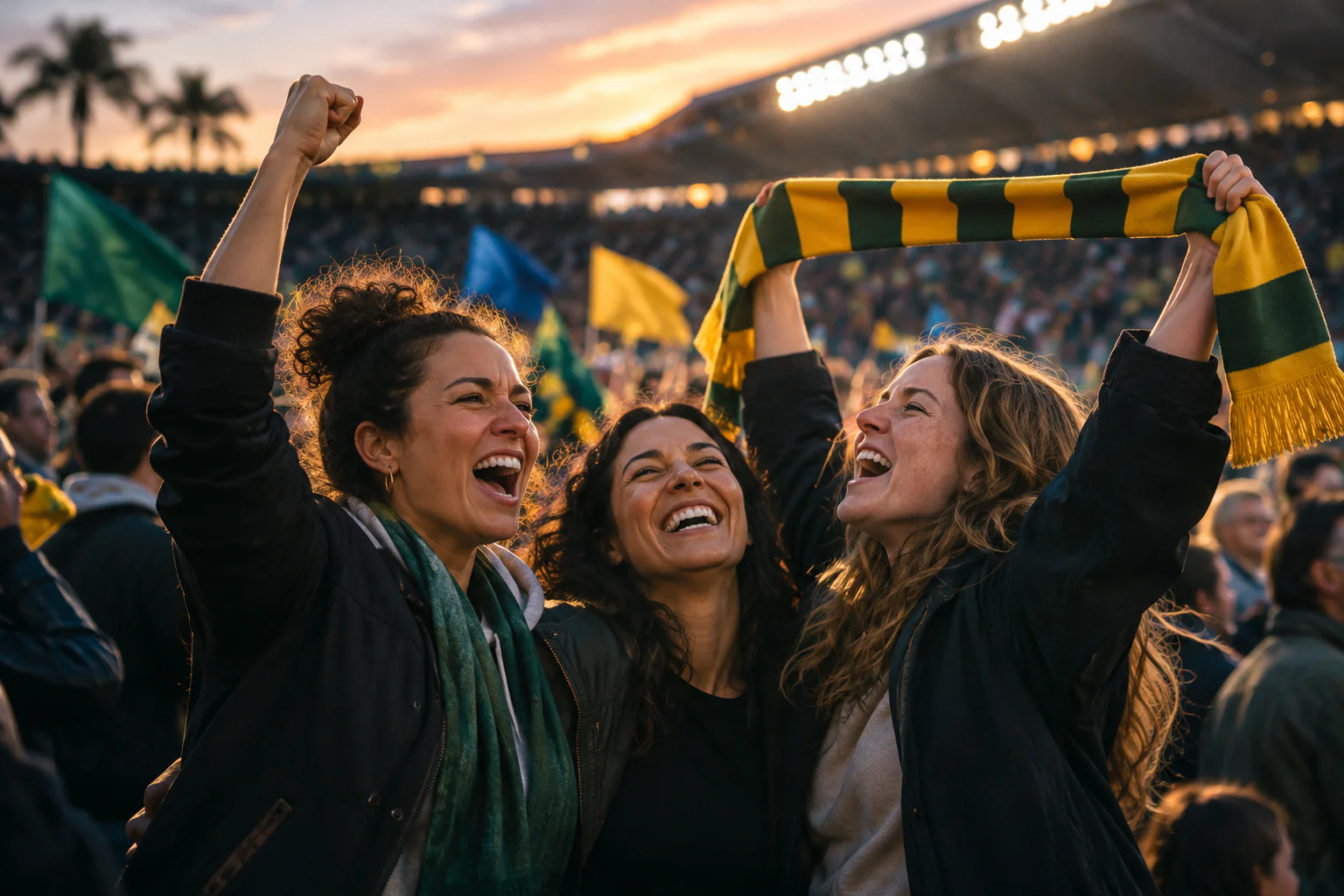
Football is nothing without its fans. So before Brazil 2027 takes shape, we went to where supporters already follow the game, the apps and websites they use every day, and asked them about the next Women's World Cup.
What they told us is a story of goodwill that is still waiting for a reason. Many fans know the tournament is coming, many are open to following it, and yet for a large share it is not yet a plan.
On the calendar, not yet in the imagination
In September and October 2026, as Brazil prepared to host the next Women's World Cup, we asked football fans a simple question on the apps and websites they already use: did you know where and when the next tournament takes place?
43% knew both the host country and the year of the next Women's World Cup, while 16% knew only the year and 10% knew only the host. Another 31% knew neither.1
The date, in other words, has travelled further than the destination. That matters, because a host is more than a fact. It gives a tournament its setting, its stories and its sense of occasion.
Around seven in ten respondents reached through Brazil-configured campaigns knew Brazil was hosting, compared with around half or fewer reached through campaigns configured for other markets.2
Awareness of the next Women's World Cup
Did you know the year and the host of the next Women's World Cup?
| Answer | Share |
|---|---|
| Knew the year and the host | 43% |
| Knew the year only | 16% |
| Knew the host only | 10% |
| Knew neither | 31% |
Interested, but not yet committed
55% of respondents in the report's intention-to-follow analysis said they were likely to follow Brazil 2027, while 45% expressed low intention.3
Many respondents were neither strongly committed nor completely uninterested: almost half chose "quite likely" or "not very likely" rather than either extreme.4
For many fans, the Women's World Cup is something they are open to rather than something they have already planned for.
Knowing about the tournament goes hand in hand with wanting to follow it, and the gap between the best and least informed fans is wide.
At least two-thirds of fans who knew both the year and the host said they were likely to follow, against around one in five of those who knew neither.5
We can't say that one causes the other, but the link is strong. And there is a twist: knowing is not the same as caring.
Fans in Brazil were no more likely than fans elsewhere to say they would follow the tournament.6
From the first whistle, or from the big games?
59% of those asked would follow most closely from the opening matches or through their own team's games.7
Others would wait for the knockout stages or the biggest matches. For most, though, the tournament starts when it starts, or when their own team walks out.
What the findings tell us
Brazil 2027 has the potential to attract fans who are interested but have not yet made plans to follow. For organisers, broadcasters and brands, the challenge is to connect basic awareness with the players, fixtures and stories that give supporters a reason to care.
The difference between awareness and intention is important. Supporters reached through campaigns aimed at Brazil were more likely to know the host country, but did not report greater intention to follow. Knowing about a tournament is not the same as deciding to watch it.
Looking ahead
The findings point to an opportunity to build anticipation before kick-off, then keep giving fans reasons to follow as the matches unfold. They describe what participating supporters said in 2026, not a prediction of how everyone will behave in 2027.
What organisations could learn
- Tell the whole story, not just the date. The year has landed further than the host, so the setting, Brazil, is the part of the story still to be told.
- Start early. The opening matches and fans' own teams were where the majority planned to begin, so the first days of the tournament carry more weight than the final weeks.
- Pair reminders with reasons. Where awareness was highest, intent was no higher. Players, stories and rivalries may matter as much as knowing the dates.
Questions worth exploring further
- Does knowing about the tournament lead fans to follow it, or do interested fans simply find out more?
- How will awareness and intent change as the tournament gets closer?
- What would turn openness into a plan for the fans in the middle?
We will keep asking. If these are questions your organisation needs answered, we can help.
About the research
- Source
- Fanometrix Women's World Cup 2027 survey programme, The Fan Opportunity: The Road to Brazil 2027.
- Method
- Fans answered short surveys of up to five questions inside football apps and websites, through our publisher partners.
- Fieldwork
- 3 September to 13 October 2026.
- Sample
- Each figure is based on the fans who answered that question (between 568 and 5,052). The base is given with every finding.
- What a response represents
- A survey session, not a unique person. One fan may appear more than once, so we describe responses rather than individuals.
- Markets and audience
- Football fans using partner apps and websites, across several markets and eight languages. A market is the market a campaign was configured for, not a fan's verified location.
- Representativeness
- Results reflect the audiences of the participating football platforms. They are not weighted to represent any country's population, or all football fans.
- Quality checks
- Every figure was checked with and without a quality adjustment that removes possible accidental or very fast answers. The article presents the report's unadjusted figures as its primary basis. Excluding possible accidental or very fast answers changes some estimates and should be considered when interpreting them. The awareness question named both the year and the host, so answers are self-reported awareness rather than a knowledge test.
Notes
- Awareness question (year and host). Base: 5,052 survey sessions. Whole-number percentages from The Fan Opportunity: The Road to Brazil 2027, p. 10. Unweighted publisher audiences; see methodology. Back to reference
- Awareness question, campaigns configured for Brazil compared with all others. Bases: 788 and 4,264 survey sessions. Holds on every comparable platform. Back to reference
- Likelihood to follow the tournament. Base: 3,166 survey sessions in the article evidence register. The report's p. 11 note cites n=3,167, but the same report's p. 12 note and the underlying article evidence register cite n=3,166. This article uses n=3,166, the corroborated register/report p. 12 basis; the difference has not been independently raw-data audited. Unweighted participating football-publisher audiences. Back to reference
- Likelihood to follow the tournament. Base: 3,166 survey sessions. Back to reference
- Likelihood to follow, by awareness. Bases: 1,389 and 1,118 survey sessions. An association, not a cause; passes the answer-position control. Back to reference
- Likelihood to follow, Brazil compared with elsewhere. Bases: 549 and 2,617 survey sessions. Back to reference
- When fans would follow most closely. Base: 568 survey sessions. Report p. 14: 32% opening match and 27% favourite teams; combined 59%. Back to reference
Fans are at the heart of our research.
Join Fanometrix to share your opinions on the game.
Join FanometrixResearch like this, for your organisation
We design and run research with football audiences for clubs, brands, leagues, federations and other organisations.
Explore Fanometrix for Organisations